Which part(s) of the course was MOST valuable to you. Please explain why.
The activity/table top sessions.
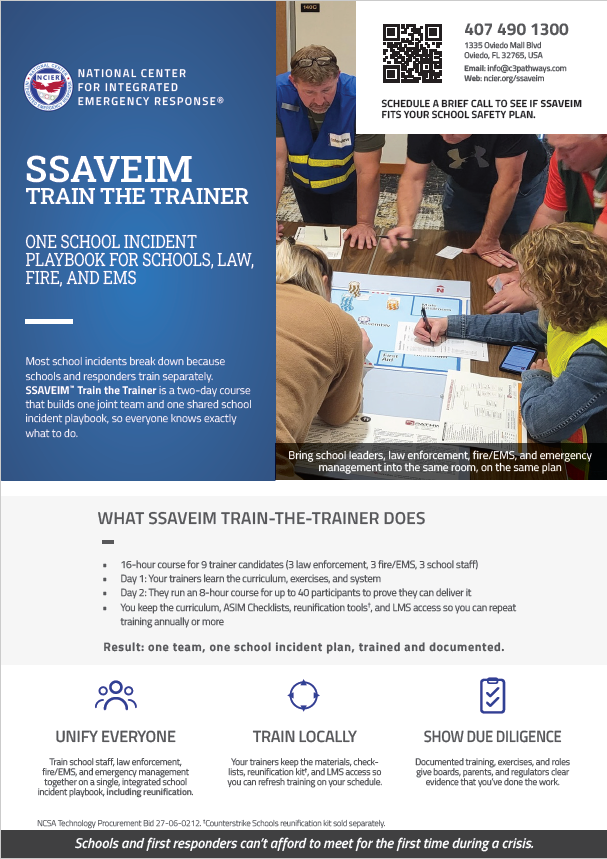
Most school incidents break down because schools and responders train separately. SSAVEIM™ Train-the-Trainer is a two‑day course that certifies your own local trainers to deliver a unified violent event incident and reunification playbook for school staff, law enforcement, fire/EMS, and emergency management.
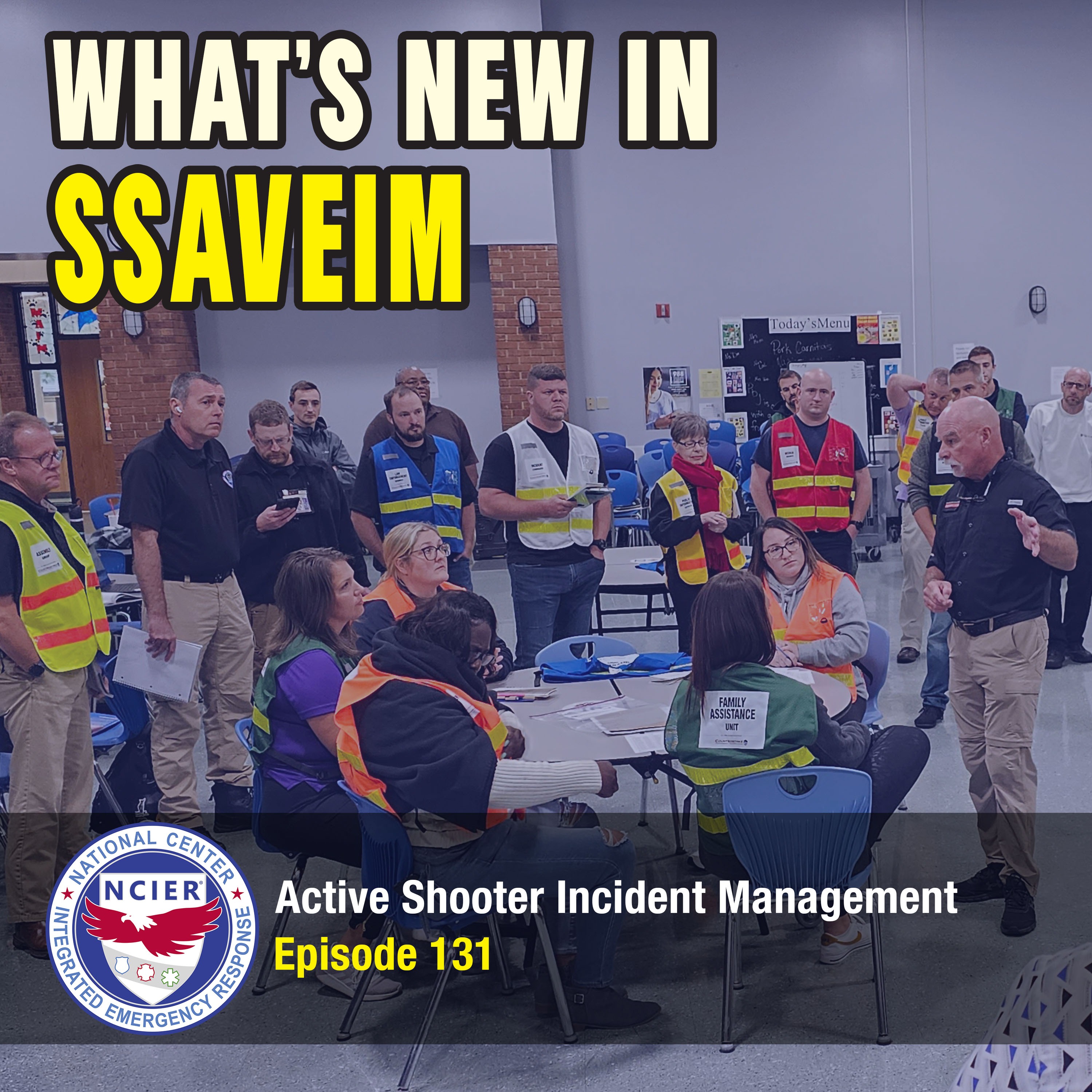
The goal is simple — decrease the time to neutralize the threat, get injured to a hospital, and reunite students with their families. SSAVEIM brings school leaders, law enforcement, fire/EMS, and emergency management into the same room, on the same plan.
Train school staff, law enforcement, fire/EMS, and emergency management together on a single, integrated school incident playbook, including reunification.
Your trainers keep the materials, checklists, reunification kit, and LMS access so you can refresh training on your schedule.
Shared training, clear roles, and course certificates help schools and responders show they’ve trained together on the same plan.
A 16-hour course for 9 trainer candidates — 3 law enforcement, 3 fire/EMS, 3 school staff. Over two days, your trainers learn the curriculum, prove they can deliver it, and leave ready to repeat training annually.
Your trainers learn the curriculum, exercises, and system.
They run an 8-hour course for up to 40 participants to prove they can deliver it.
This course provides you with the experience and confidence to respond to a violent event, regardless of your daily responsibilities. Participants are trained to secure the students, identify the threat, provide medical intervention, and reunify students with their loved ones.
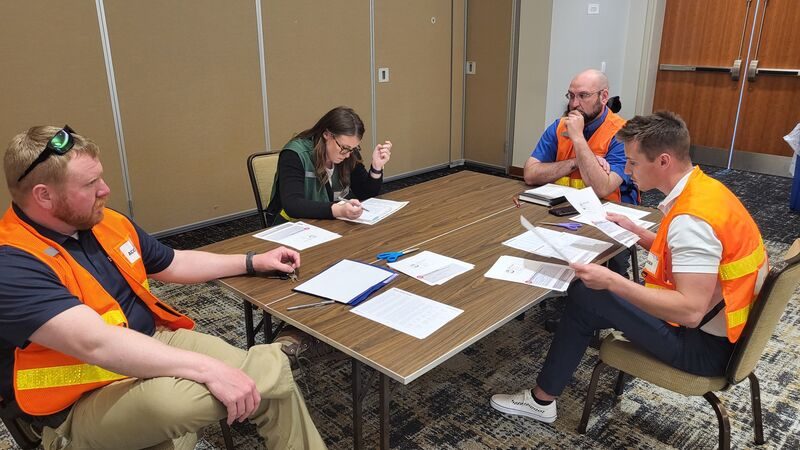
School personnel work alongside law enforcement, fire/EMS, dispatch, PIO, and emergency management — so your team meets and trains together before a crisis, not during one.
Full-scale exercises utilize Counterstrike™, a tangible tabletop tool which provides a bird’s eye view to the incident, generating a greater understanding of the process.
Participants rotate through different roles and assignments so everyone understands the full range of violent events and responses.
Instructors utilize a no-fault, no-embarrassment coaching style, providing hands-on experience for entry level and executives alike.
Your trainers keep everything they need to deliver SSAVEIM locally and repeat training on your schedule — with no per-delivery fee from NCIER.
Bring school leaders, law enforcement, fire/EMS, and emergency management into the same room, on the same plan.
Hosts provide the venue, AV support, and participants. NCIER provides the SSAVEIM curriculum, Counterstrike™ Reunification tools, and instructor team.
Here’s what happens over the next 1 business day.
Keep an eye out for a call from (407) 490-1300. If you don’t hear from us within 1 business day, call us at (407) 490-1300.
Prefer to talk now? Call (407) 490-1300.
ASIM QuickStart gives every responder a shared incident management baseline. SSAVEIM Train-the-Trainer builds one joint team and one shared incident playbook, so everyone knows exactly what to do.
15–20 minutes, no obligation. We’ll help you figure out if hosting SSAVEIM Train-the-Trainer makes sense for your schools.
Schedule a Brief CallWhich part(s) of the course was MOST valuable to you. Please explain why.
The activity/table top sessions.
Which part(s) of the course was LEAST valuable to you? Please explain why.
None.
Please provide any other comments or suggestions you have for improving this course.
This is course was very informative. For me it was fine the way it was presented.
What other training is most important to you now that you have completed this course?
The RTF sounds very interesting.
Which part(s) of the course was MOST valuable to you. Please explain why.
Kevin’s knowledge and experience.
Which part(s) of the course was LEAST valuable to you? Please explain why.
Silly questions from volunteers from the OEM / EMS field.
Please provide any other comments or suggestions you have for improving this course.
Make it quicker.
What other training is most important to you now that you have completed this course?
Continuing more advanced training on this subject.
Which part(s) of the course was MOST valuable to you. Please explain why.
Table top drills / discussion.
Which part(s) of the course was LEAST valuable to you? Please explain why.
Lecture - but the pacing was appropriate / back and forth w/ the table top made it effective and necessary.
Please provide any other comments or suggestions you have for improving this course.
POV of more school administrators / their role.
What other training is most important to you now that you have completed this course?
Student did not leave a written comment.
Which part(s) of the course was MOST valuable to you. Please explain why.
Finding out some of the basic organization for managing school shootings.
Which part(s) of the course was LEAST valuable to you? Please explain why.
All seemed valuable.
Please provide any other comments or suggestions you have for improving this course.
Student did not leave a written comment.
What other training is most important to you now that you have completed this course?
Student did not leave a written comment.
Which part(s) of the course was MOST valuable to you. Please explain why.
Student did not leave a written comment.
Which part(s) of the course was LEAST valuable to you? Please explain why.
Student did not leave a written comment.
Please provide any other comments or suggestions you have for improving this course.
Student did not leave a written comment.
What other training is most important to you now that you have completed this course?
Student did not leave a written comment.
Which part(s) of the course was MOST valuable to you. Please explain why.
Working with other disciplines was very good.
Which part(s) of the course was LEAST valuable to you? Please explain why.
This course should be mandatory for all command staff.
Please provide any other comments or suggestions you have for improving this course.
Very good course!.
What other training is most important to you now that you have completed this course?
Working with other disciplines.
Which part(s) of the course was MOST valuable to you. Please explain why.
Student did not leave a written comment.
Which part(s) of the course was LEAST valuable to you? Please explain why.
Student did not leave a written comment.
Please provide any other comments or suggestions you have for improving this course.
Student did not leave a written comment.
What other training is most important to you now that you have completed this course?
Student did not leave a written comment.
Which part(s) of the course was MOST valuable to you. Please explain why.
Scenarios and discussion surrounding them.
Which part(s) of the course was LEAST valuable to you? Please explain why.
None, it’s a great course.
Please provide any other comments or suggestions you have for improving this course.
Great content with outstanding instructors.
What other training is most important to you now that you have completed this course?
Reunification.
Which part(s) of the course was MOST valuable to you. Please explain why.
The whole course was good for me because I've not work on this course.
Which part(s) of the course was LEAST valuable to you? Please explain why.
I had no least valuable part's it was all new and good information for me to present.
Please provide any other comments or suggestions you have for improving this course.
Keep providing this information because it will save lives.
What other training is most important to you now that you have completed this course?
I need to keep learning this program so I can become a better instructor.
Which part(s) of the course was MOST valuable to you. Please explain why.
Detailed discussion with instructor team.
Which part(s) of the course was LEAST valuable to you? Please explain why.
N/A.
Please provide any other comments or suggestions you have for improving this course.
Everything was excellent.
What other training is most important to you now that you have completed this course?
N/A.
*Evaluations are collected from verified course participants and published without editing. Ratings and comments reflect each participant’s individual experience.